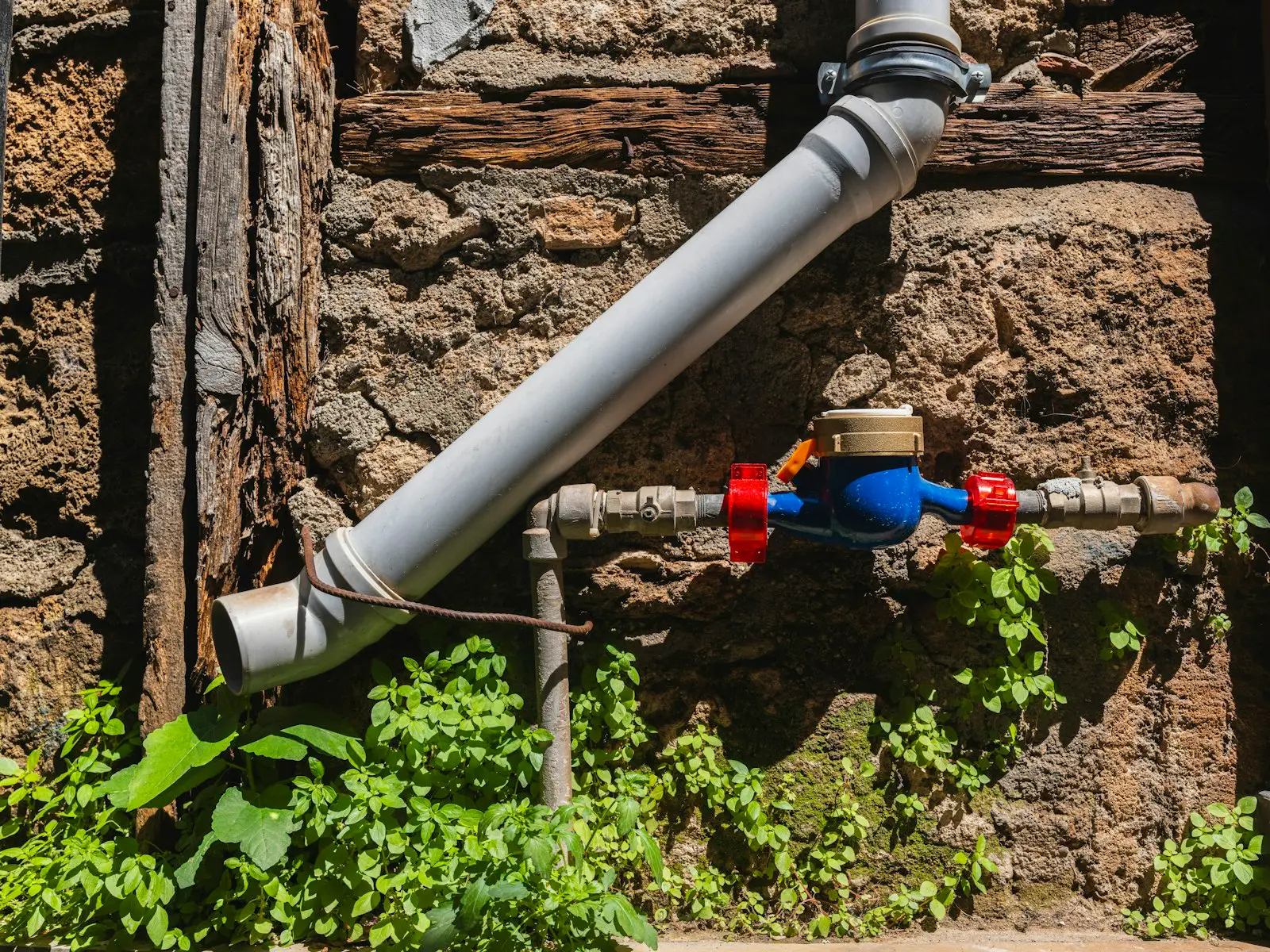
It usually starts one of two ways. Either the water bill has been creeping up for a few months with no change in how you use water, or the water company gets in touch to say the meter at your address never stops. Either way, water is leaving your plumbing somewhere you cannot see, and it is costing you money every hour.
A leak of one gallon a minute does not sound like much. Over a day it is 1,440 gallons. The good news is that you can narrow down where it is before anyone picks up a shovel.
Step 1: Confirm the meter is really moving
Turn off every faucet, shower and water-using appliance in the house, including the dishwasher, washing machine, ice maker, irrigation system and any water softener. Then go to the meter, usually in a box near the street or sidewalk.
- Many meters have a small leak indicator, often a little triangle or star-shaped dial, that spins with even a tiny flow. If it is turning, water is moving.
- If there is no indicator, write down the reading, use no water for an hour or two and read it again. The EPA WaterSense program suggests a two-hour wait. If the number has changed, you have a leak.
Step 2: The shutoff test that splits the problem in half
This is the most useful thing you can do before calling a plumber. Find the main shutoff valve where the water line enters your house. It is often in the garage, in the crawlspace near the front wall or close to the water heater. Close it, then go back and look at the meter.
- The meter stops. The leak is inside the house: a toilet, a fixture, the water heater or a pipe in a wall or under the floor.
- The meter keeps moving. The leak is outside, on the underground line between the meter and your house.
One caller described it perfectly: with the house valve closed there was no leak, and the moment it was opened the meter started running again. That told us straight away the problem was somewhere inside the home.
If the leak is inside the house
Start with the most common and cheapest causes:
- Toilets. They are the usual suspect. A worn flapper lets water slip from the tank into the bowl without a sound. Put a few drops of food coloring in each tank and wait 10 minutes without flushing. Color in the bowl means a leak. A toilet that refills by itself now and then is another giveaway.
- The water heater. Check the relief valve pipe on the side of the tank for a drip and look around the base for moisture.
- Faucets and fixtures. Look under every sink and behind the washing machine.
- Hidden pipes. If all of that checks out and the meter still runs with the house valve open, the leak is likely in a wall, a ceiling or under a slab floor. Warm spots on a tile floor, a musty smell or a stain that keeps growing are clues.
A hidden pipe leak is where our plumbing leak detection service comes in. If you have a warm spot on a concrete floor, see our page on slab leak detection and repair.
If the leak is between the meter and the house

An underground leak on the service line is common, especially on older lines and on the long runs you find on larger lots and hillside properties. Signs include a strip of lawn that stays soggy or greener than the rest, a sunken patch along the route of the pipe, water in the meter box or low pressure throughout the house.
Some homeowners get remarkably close on their own, down to a section of the front yard. The last stretch is the hard part, especially with plastic pipe, which metal pipe locators cannot follow. Finding the exact spot before digging is what keeps the repair to one small hole instead of a trench across the lawn. Our water main repair page covers how these lines are fixed.
Whose leak is it?
Around Beaverton, water comes from the City of Beaverton, Tualatin Valley Water District or a smaller local district, depending on your street. In general, the provider looks after the meter and everything on the street side of it. The line from the meter to your house, and every pipe inside, belongs to the property owner. If water is coming up in the meter box itself, tell your water provider as well, since the leak may be on their side.
Rentals, multi-unit buildings and homes for sale
- Rentals. Tenants often do not notice a running toilet or do not report it. If the meter for a rental never stops, start with the toilets in every unit.
- Multi-unit buildings. With one meter for several units, the shutoff test still works, but you may need to close the valves for each unit in turn to find which one holds the leak.
- Selling a home. A leak check before listing means you hear about a problem before a buyer's inspector does.
When to call
Call us if the meter is still moving after you have checked the toilets, if the shutoff test points to the yard, or if you see signs of water in a wall, ceiling or floor. Tell us what the shutoff test showed and what you have already checked. That one detail saves real time once a plumber is on site.
If water is actively coming through a ceiling or wall, that is not a detection job any more. Close the main valve and call for emergency water leak repair right away.