A leak that shows up overnight feels random, but it rarely is. In most homes we visit around Beaverton, the cause turns out to be one of a few parts that wear out quietly for years and then fail in a single moment. Here is what those parts are, how to check them yourself and what the repair usually involves.
First, stop the water
Before you play detective, close the nearest shutoff. Every sink and toilet should have a small valve underneath or behind it. If the water is coming from a wall, a ceiling or somewhere you cannot see, close the main water shutoff instead. Then put down towels and move anything that can be damaged.
The most common causes of sudden leaks
1. Failed supply hoses
The flexible lines that feed toilets, faucets, washing machines, ice makers and dishwashers sit under constant pressure. Rubber hoses harden and crack with age, and braided lines can corrode at the crimped ends. When one lets go, it releases water at full pressure until someone closes a valve. Washing machine hoses are the classic culprit, because they are often hidden behind the machine and nobody looks at them.
The fix: replace the hose, and usually its twin, since they are the same age.
2. Pinhole leaks in pipe
Copper and older galvanized steel pipe can corrode from the inside until a tiny hole opens up. Pinholes often start as a fine spray or a steady drip from a pipe in the crawlspace, garage or inside a wall. Where there is one, there may be more on the same run of pipe.
The fix: cut out the damaged section and replace it. If the pipe is thin along its length, replacing a larger section can make more sense than patching hole after hole. Our emergency pipe repair page covers the options.
3. Fittings and joints that give way
Every joint is a possible weak point. Threaded joints on galvanized pipe rust, compression fittings under sinks loosen as they are bumped and soldered joints can fail after years of the pipe expanding and contracting. A sudden jump in water pressure can be the last straw.
The fix: remake or replace the joint, and check the pressure if fittings keep failing.
4. Freezing
Water expands as it freezes, and the pressure can split a pipe. In a cold snap the split often stays hidden, plugged by ice, and the leak only appears when temperatures rise and the ice melts. Outdoor spigots and the short pipe feeding them are a common example, especially if a hose was left attached.
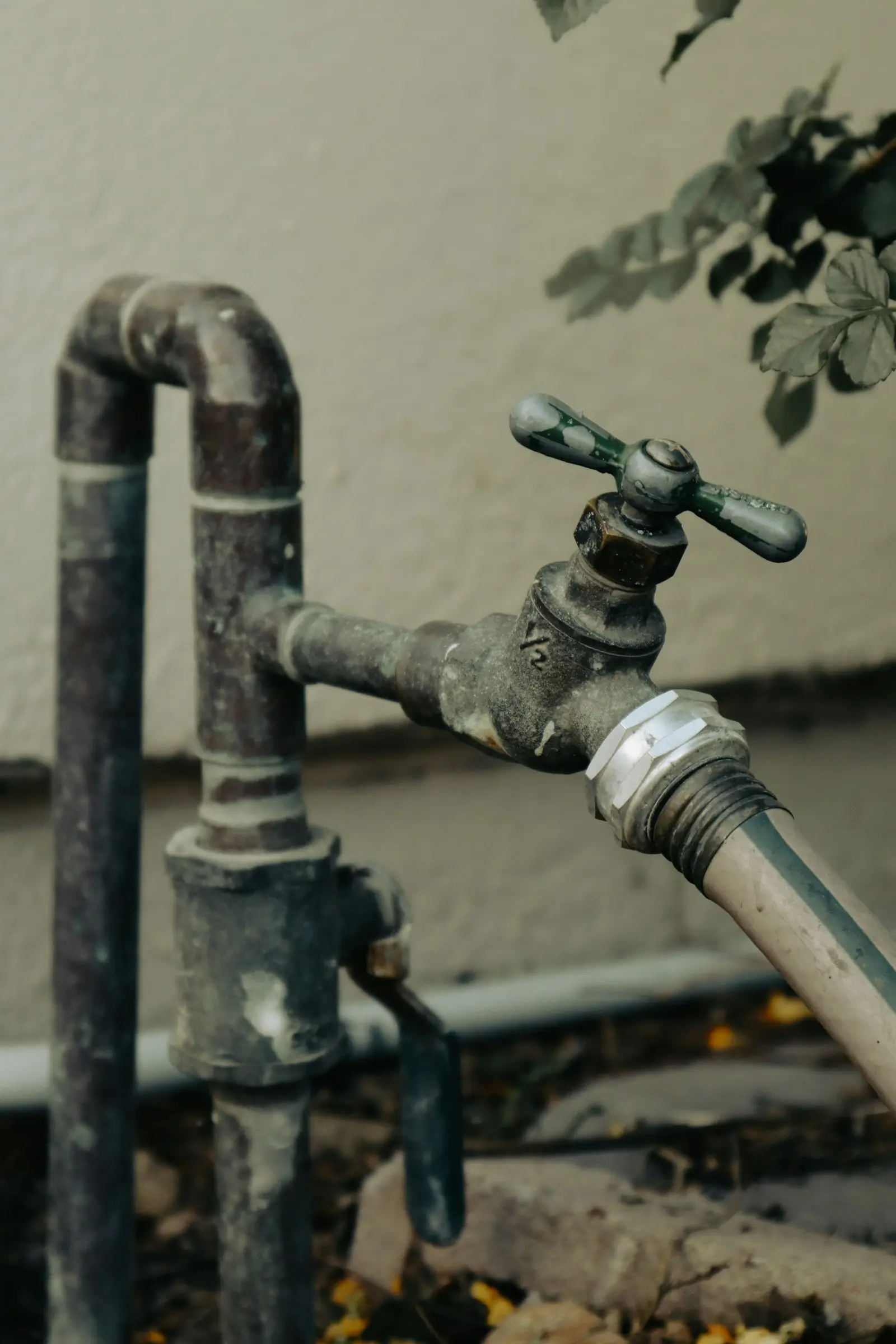
The fix: replace the split section and protect it before the next freeze. Our guide on how to prevent frozen pipes covers the steps.
5. High water pressure
Many homes have a pressure reducing valve where the main line enters the house. When that valve wears out, pressure inside the home can creep up, which strains hoses, fittings, faucets and the water heater. Signs include banging pipes, faucets that spit when opened and a relief valve that drips from the water heater.
The fix: test the pressure and replace the regulator if it has failed.
6. Wax ring and drain leaks
Not every leak is on the supply side. A toilet that rocks can break the wax seal underneath, and a slip joint under a sink can loosen. These only leak when water is used, which is why the stain may appear and disappear.
The fix: reset the toilet on a new seal, or tighten or replace the drain fittings.
7. Damage you did not notice
A screw driven through a pipe while hanging a shelf, a nail from a remodel or a pipe rubbing against framing for years can all lead to a leak that seems to come from nowhere.
How to tell whether you have a hidden leak
If you see water damage but cannot find a source, try these checks from the EPA WaterSense program:
- Meter test. Read your water meter, use no water for two hours, then read it again. If the number has changed, water is going somewhere.
- Toilet dye test. Put a few drops of food coloring in the toilet tank. If color shows up in the bowl within 10 minutes without flushing, the flapper is leaking. Flush afterwards so the dye does not stain.
Other clues include a water bill that jumps for no reason, the sound of running water when everything is off, warm spots on a tile or concrete floor and a musty smell near one wall. If the meter is moving and you cannot see why, our plumbing leak detection service pins down the location before any wall or floor is opened.
Repair or call a plumber?
Some fixes are reasonable for a handy homeowner: replacing a toilet flapper, swapping a supply hose with the valve closed or tightening a slip nut under a sink. Call a plumber when:
- Water is coming from inside a wall, ceiling or floor
- The leak is on the main line or before the main shutoff
- The shutoff valve itself will not close or is leaking
- You find corrosion along a length of pipe, not just one spot
- Water has reached wiring, a light fixture or the electrical panel
For any of those, our emergency water leak repair team answers around the clock.
Cutting the odds of the next one
- Look at washing machine and toilet supply hoses once a year and replace any that are cracked, bulging or rusty at the ends.
- Exercise your shutoff valves every so often so they turn when you need them.
- Disconnect garden hoses before the first frost.
- Pay attention to banging pipes or a dripping relief valve, both signs of high pressure.
- Keep an eye on your water bill for unexplained jumps.
If water is showing up where it should not right now, close the nearest valve and call us. We answer 24 hours a day and come out the same day.