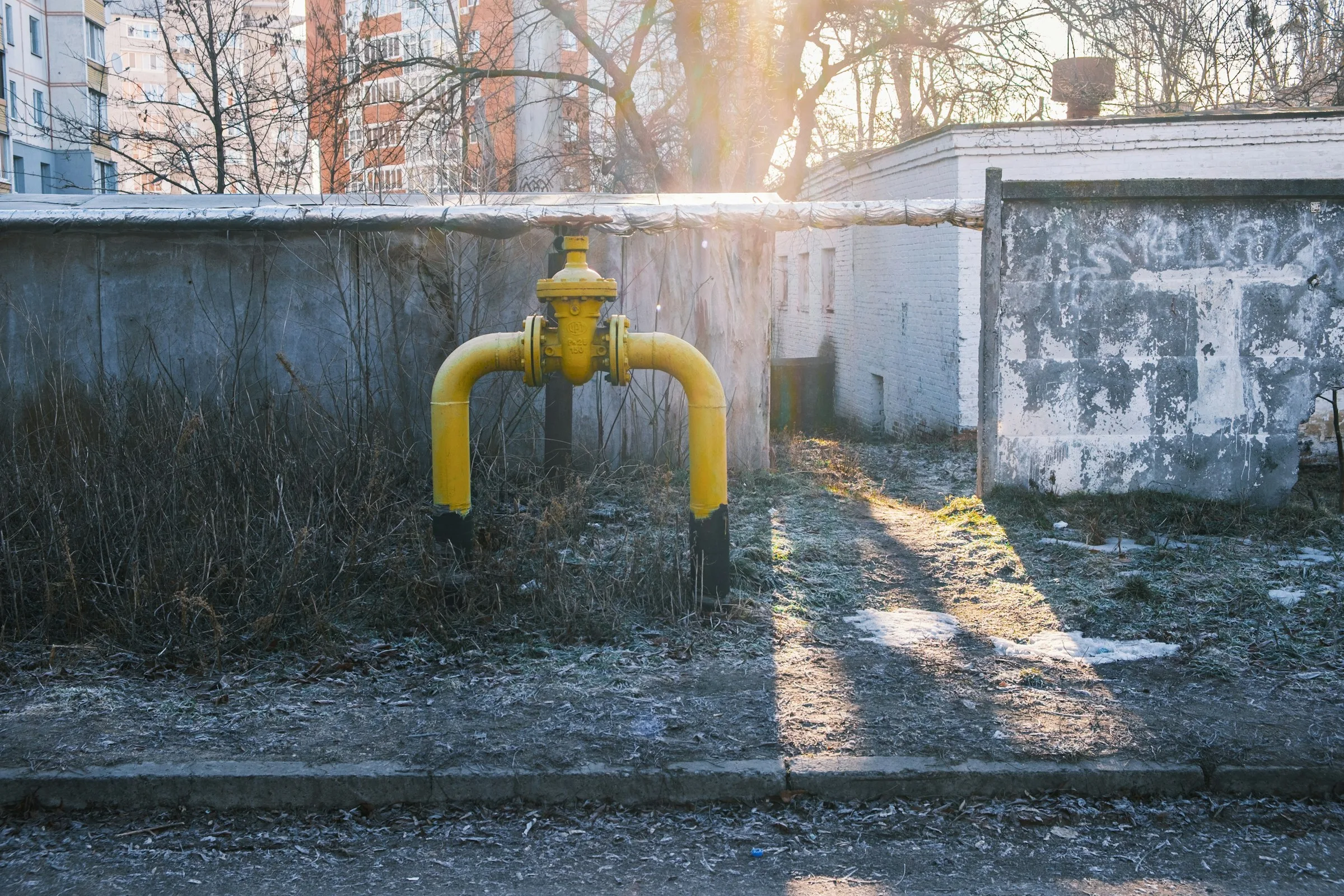
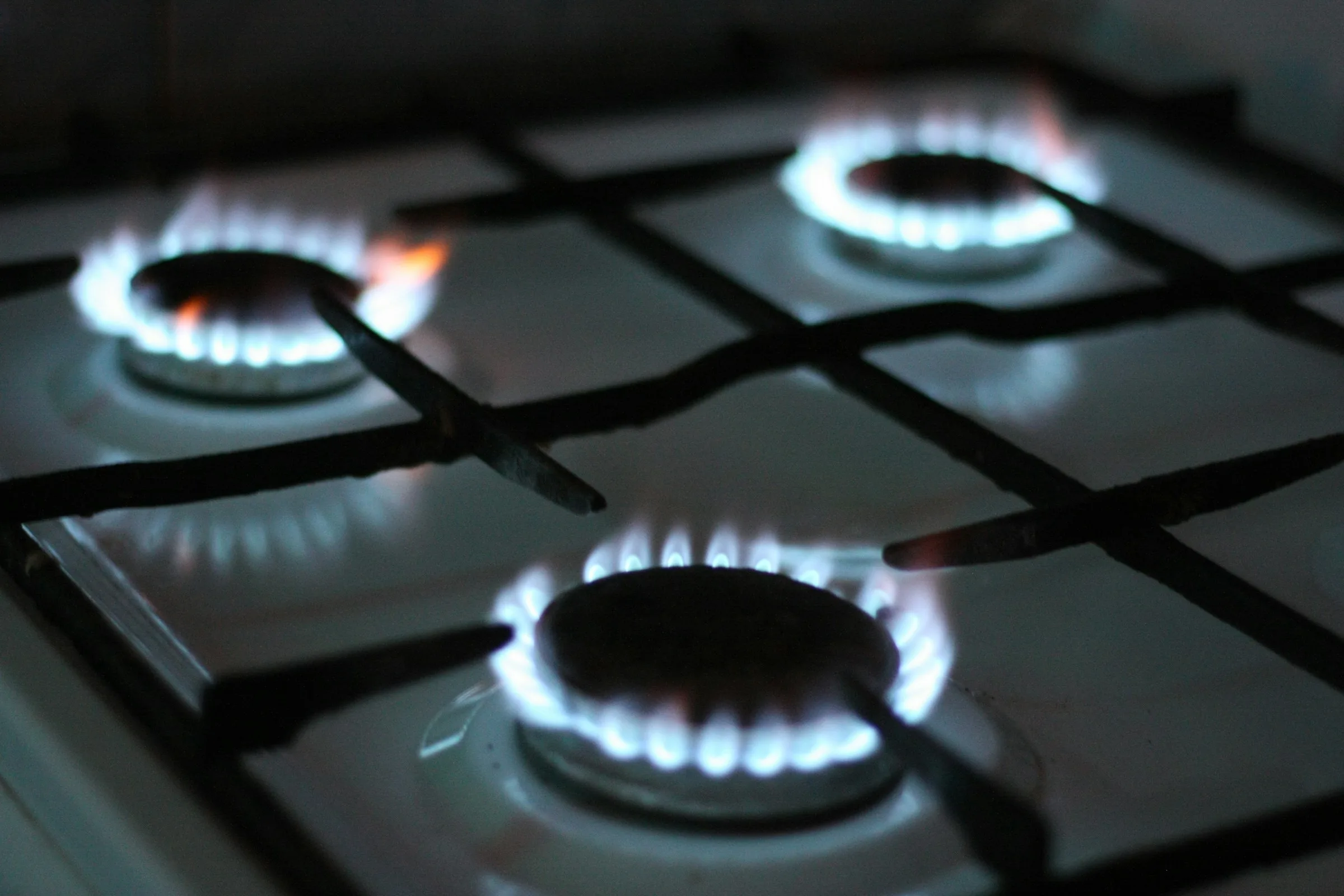
NW Natural supplies natural gas to homes across Beaverton and the west side. It owns and looks after the pipes in the street, the service line to your house and the meter. Everything after the meter belongs to the homeowner: the pipe running into the house, the branches to each appliance and any buried lines to a detached garage, a shop, a grill or a fire pit. Repairs on that side are done by a licensed plumber or gas fitter.
If you smell gas, call the utility first
A rotten egg smell, a hissing sound near a gas appliance or the meter, or bubbles rising through a puddle over a buried line all mean the same thing: leave first and call from outside. Do not switch lights on or off, use a phone inside or try to find the leak. Call NW Natural's emergency line or 911 once you are a safe distance away.
NW Natural will come out, check for gas and make the area safe. If the leak is on the homeowner side of the meter, they may shut off the gas or lock the meter until the line is repaired. That is when a plumber comes in. Our guide to the signs of a gas leak at home covers the warning signs in more detail.
Call NW Natural for
- Any smell of gas, inside or outside
- Damage to the meter or the pipe leading into it
- A line struck while digging, even if you do not smell anything yet
- Starting new gas service to a home that does not have it
- Moving or upgrading the meter
Call a plumber for
- Repairing a leak on the house side of the meter after the utility has made it safe
- Replacing an old or kinked flexible connector behind a range or dryer
- Fixing or replacing a worn appliance shutoff valve
- Repairing a buried line to a garage, shop, pool heater or outdoor kitchen
- Running a new line for a gas range, tankless water heater, fireplace or grill
- Pressure testing the system before the gas is turned back on
What a gas line repair involves
The plumber first isolates the damaged section and finds the exact leak, using leak detection solution on fittings and an electronic detector along the pipe. Then the damaged pipe, fitting or connector is cut out and replaced with approved material. On older homes that often means black iron pipe; newer work may use corrugated stainless steel tubing.
After the repair, the line is pressure tested. It is closed off, put under pressure and watched on a gauge to confirm it holds. Only then are appliances reconnected, relit and checked. Our gas line repair page goes through the process.
Permits and inspections
Most gas piping work needs a permit and an inspection. Inside Beaverton city limits that goes through the City of Beaverton. In unincorporated areas such as Aloha, Cedar Mill and parts of Cooper Mountain, it goes through Washington County. A licensed plumber pulls the permit and arranges the inspection. If the utility locked the meter after a leak, a passed inspection is usually what gets the gas turned back on.
Common causes of gas line problems
- Flexible connectors that have been bent back and forth each time a range or dryer was moved
- Threaded joints on old black iron pipe that have loosened or corroded
- Shutoff valves that have worn out after decades
- Buried lines nicked by shovels, fence posts or landscaping
- DIY appliance hookups done without a pressure test
Before you dig
Call 811 or file a request online with the Oregon Utility Notification Center at least two business days before digging. The utility will mark its lines. Lines you own past the meter usually are not marked, so if you have a buried line to a shop or a grill, find out where it runs before you dig near it.
Signs a gas line needs attention, even without a smell
A strong rotten egg smell is the sign everyone knows, but gas problems often show up in quieter ways first. Any of these is worth a call to a plumber during normal hours:
- A pilot light that keeps going out
- Burner flames that are yellow, orange or lazy instead of mostly blue
- Soot or scorch marks around an appliance
- A faint smell that comes and goes near one appliance
- A gas bill that rises without a change in use
- Appliances that struggle when several run at once
- A stiff or corroded shutoff valve
- An old, dull brass flexible connector behind the range or dryer
None of these is proof of a leak, but each one means something in the gas supply or the appliance is not working as it should. A plumber can test the line and check the connection before it becomes an emergency.
What gas piping in Beaverton homes is made of
Most homes in the area use one or more of these materials:
- Black iron pipe. Threaded steel pipe, the traditional choice inside homes. It lasts a long time, but threaded joints can loosen or corrode, particularly in damp crawlspaces.
- Corrugated stainless steel tubing. Flexible yellow-jacketed tubing, common in newer homes and remodels because it can be run through walls in long lengths with fewer joints. It has to be installed and electrically bonded according to the manufacturer's instructions and the code, since a lightning strike nearby can damage tubing that is not properly bonded.
- Polyethylene pipe. Yellow plastic pipe used for buried lines outdoors, such as runs to a detached garage or an outdoor kitchen. It must stay underground and transition to metal pipe before it comes above ground.
- Flexible appliance connectors. Short coated connectors between the shutoff valve and each appliance.
A repair uses material that matches the system and the code. Mixing materials without the right fittings, or using parts not approved for gas, is one of the most common problems found in do-it-yourself gas work.
Why adding an appliance can starve the others
Every gas appliance needs a certain volume of gas to run properly. The pipes in a house are sized for the appliances it was built with. When a homeowner adds a gas range, a tankless water heater, a fireplace insert or an outdoor grill, the total demand goes up. If the pipe is too small for the new total, appliances further along the line can get too little gas when several run at once.
The symptoms are easy to miss: a furnace that struggles when the dryer runs, a tankless water heater that throws an error during a shower, flames that shrink on the range when the fireplace is on. A plumber works out the total load, measures the length of each run and sizes the pipe so every appliance gets what it needs. Sometimes that means a larger main line from the meter, and sometimes a request to NW Natural to check the meter's capacity.
What a gas pressure test involves
A pressure test is how a plumber proves a gas line is tight. After a repair or new installation:
- The section being tested is isolated from the meter and the appliances.
- It is filled with air to a set test pressure, higher than normal operating pressure.
- A gauge is attached and watched for a set period of time.
- If the pressure holds steady, the line is tight. If it drops, there is a leak somewhere, and each joint is checked until it is found.
For work that needs a permit, the inspector usually checks the test as well. Only once the line passes are the appliances reconnected and relit.
Gas lines to outdoor features
Outdoor gas features have become common around Beaverton: built-in grills, fire pits, patio heaters, pool and spa heaters and standby generators. Each one needs a properly sized line, usually buried, with a shutoff valve near the appliance.
- Buried lines must be run at the right depth with approved pipe, and they transition to metal pipe where they come out of the ground.
- The route should be recorded, since the utility will not mark lines you own when you call 811.
- Outdoor connections need to be protected from weather, lawn equipment and damage.
Problems with outdoor lines often come from digging: a new fence post, a sprinkler line or a planting bed. If you hit a buried gas line, even if you do not smell gas, leave the area and call NW Natural or 911.
Moving or replacing a gas appliance
Moving a range for a kitchen remodel, swapping an electric dryer for gas or replacing a water heater all mean disconnecting and reconnecting gas. Good practice for each one:
- Use a new, coated flexible connector rather than reusing the old one.
- Make sure there is an accessible shutoff valve for the appliance.
- Check that the connector is not kinked or stretched once the appliance is pushed back into place.
- Leak test every joint that was disturbed.
- Install the appliance's anti-tip bracket or strapping where required.
Water heaters and furnaces also need correct venting, so exhaust gases leave the house. A new appliance with a different efficiency or size may need a different vent from the one it replaced.
Gas leaks in the crawlspace
In many Beaverton homes, the main gas line runs through the crawlspace from the meter to the furnace, the water heater and the kitchen. It is a damp place, and black iron pipe there can rust at the threads over the years. A leak in the crawlspace is easy to miss, because gas can collect under the floor before anyone smells it upstairs.
A faint gas smell near the crawlspace hatch, near floor registers or in a closet over the crawlspace is worth taking seriously. Do not go into the crawlspace to look. Leave the house and call the utility. Once the area is safe, a plumber can find the leak with leak detection solution and an electronic detector and replace the corroded fitting or section of pipe.
Any time a plumber or other contractor is working in your crawlspace, it is a good opportunity to have them look at the condition of the gas pipe and its supports.
Emergency gas repairs at night and on weekends
Gas leaks do not wait for business hours. If NW Natural or the fire department has shut off your gas at night, the house may have no heat and no hot water until the line is repaired. In winter, that is urgent, especially for young children, older relatives and anyone with health conditions.
An emergency gas repair follows the same steps as a daytime one: find the leak, repair it with approved materials, pressure test the line, and relight the appliances once the utility has restored service. Where an inspection is required, the plumber will arrange it, and in some cases a temporary repair keeps the house safe and warm until the permanent work can be completed.
Choosing who works on your gas line
Gas work should only be done by a licensed professional. In Oregon, plumbers and specialty gas fitters are licensed to work on gas piping and appliance connections. Before work starts, it is reasonable to ask:
- Are you licensed for gas work in Oregon?
- Will you pull the permit, if one is needed?
- How will you test the line before the gas is turned back on?
- What is included: the repair, the test, relighting appliances and the inspection?
A plumber who answers those clearly is one you can trust with the job. Be wary of anyone who suggests skipping the permit or the pressure test to save time, since both exist to catch the kind of small leak that becomes a big problem later.
Common questions
Can I replace a gas connector behind my stove myself?
It looks simple, but a connector that is not sealed or tightened properly can leak, and the work should be leak tested afterwards. Many people prefer to have a plumber do it, especially on older systems.
How long does a gas line repair take?
Replacing a connector or valve often takes under an hour. Repairing a section of pipe in a crawlspace or a buried line takes longer, plus testing and, where needed, an inspection.
Does NW Natural repair gas lines inside my house?
No. NW Natural looks after the meter and its own lines up to it. Piping on the house side of the meter is the homeowner's responsibility and is repaired by a licensed plumber.
Will my gas be shut off during the repair?
Usually just the section being worked on is shut off at a valve. For some repairs, the gas to the whole house is turned off at the meter and appliances are relit afterwards.
Can I switch from electric to a gas range or dryer?
Usually, yes, if there is a gas line nearby or one can be run to the spot. The plumber checks that the existing pipe can supply the extra load, runs a new branch with a shutoff valve and leak tests it. A dryer also needs a proper vent to the outside. Most of these jobs need a permit.
Do I need a carbon monoxide alarm if I have gas appliances?
Yes. Any home with fuel-burning appliances should have working carbon monoxide alarms on every level and near sleeping areas. Our guide to the signs of a gas leak at home explains why.
New gas appliances
Adding a gas range, a tankless water heater or an outdoor kitchen usually means a new branch line and sometimes a larger supply pipe, because each appliance needs enough gas flow to run properly. Our gas line installation page explains how lines are sized and tested.
If NW Natural has made the area safe and your line needs repair, call us. We answer 24 hours a day and can usually start the same day.