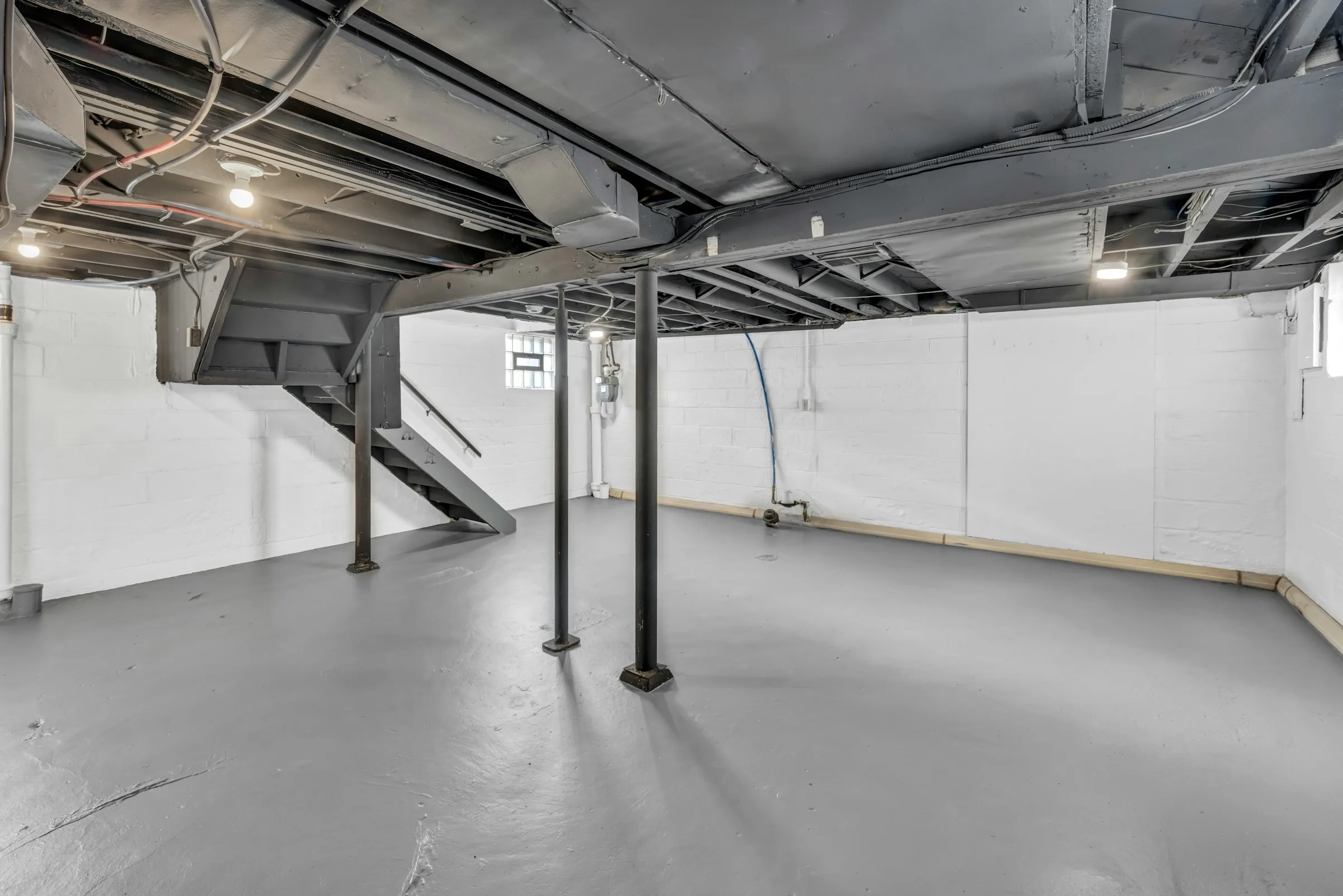

A sewage backup usually shows up at the lowest drain in the house first: a basement floor drain, a downstairs shower or a ground-floor toilet. It can be a small puddle or several inches of dirty water. Either way, it means wastewater cannot get out through the sewer line, so anything you flush or drain upstairs will add to it.
1. Stop using water
Tell everyone in the house not to flush, shower, run the dishwasher or use the washing machine. Every gallon that goes down a drain upstairs can come back up at the low point. If the washer or dishwasher is mid-cycle, stop it.
2. Keep people and pets away
Sewage carries bacteria and viruses. Keep children and pets out of the area. Anyone with a weak immune system, a cut on their hands or feet, or who is pregnant should stay clear entirely.
3. Watch for electrical danger
If water has reached outlets, cords, a furnace, a water heater or the electrical panel, do not walk through it. Only switch off breakers if you can reach the panel while standing somewhere dry. If you cannot, call for help and wait.
4. Call a plumber to clear the line
Cleanup comes second. If the sewer line is still blocked, the backup will keep coming, and anything you clean will get dirty again. A plumber will open the cleanout, clear the blockage and usually run a camera through the line to see what caused it. Our sewer backup repair page explains how that works.
Tell us which drains are backing up and whether it happens only when you run water or all the time. If every drain in the house is slow or backing up, the problem is in the main sewer line. If it is one fixture, it is often a branch line.
5. Document everything
Before you clean, take photos and video of the water, the damage and anything ruined. Note the time it started. If you plan to make an insurance claim, call your insurer early. Many standard homeowner policies do not cover sewer backup unless an endorsement was added, so it is worth checking your policy before you throw anything away.
6. Cleaning up safely
The restoration industry treats sewage as the most contaminated kind of water. For a small backup on a hard floor, a homeowner can clean it with care:
- Wear rubber boots, waterproof gloves, eye protection and a mask.
- Open windows and run fans to ventilate, keeping air moving out of the house.
- Remove standing water with a wet vacuum or a pump, then shovel up solids.
- Scrub hard surfaces with hot water and detergent, then disinfect.
- Bag and throw away anything porous that the sewage touched and that cannot be washed hot: rugs, cardboard boxes, upholstered furniture, mattresses and stuffed toys.
- Wash your clothes separately afterward and shower.
Call a water damage restoration company instead when the backup covered a large area, soaked carpet or drywall, reached a finished basement or sat for more than a day. Drywall and insulation that have wicked up sewage usually need to be cut out and replaced, and the space needs proper drying to avoid mold.
Why sewer lines back up
- Tree roots. Roots find small cracks and joints in older sewer pipe and grow into a mat that catches everything.
- Grease. Cooking fat poured down the sink cools and sticks to the pipe walls.
- Wipes and paper towels. Wipes sold as flushable hold together in the pipe long after toilet paper has broken apart.
- A sagging or broken pipe. A low spot in the line collects waste until it blocks.
- Heavy rain. During storms, groundwater can get into cracked pipes and overload the line.
Our guide to sewer line backup warning signs covers the early clues, like gurgling drains and slow tubs, that often show up weeks before a backup.
Whose pipe is it?
Clean Water Services runs the public sewer system across urban Washington County. The pipe that runs from your house to that public main is usually yours to maintain. When a camera shows the problem sits in the public main instead, report it to the sewer authority so their crew can clear it.
Clean water, gray water and sewage
Not all water in the house is equally dirty, and the type of water decides how careful the cleanup needs to be. The water damage restoration industry groups it into three categories:
- Clean water comes from a supply line: a burst pipe, a split hose, an overflowing sink with clean water. It is the easiest to clean up if it is dried quickly.
- Gray water has some contamination: water from a washing machine, a dishwasher or a toilet bowl with no waste in it. It needs disinfecting as well as drying.
- Sewage, sometimes called black water, contains human waste and the bacteria and viruses that come with it. Water backing up from a sewer line belongs here, even if it looks fairly clear.
Clean water that sits for a day or two can also become contaminated as bacteria grow. That is one more reason to deal with any water in the house quickly.
What to throw away and what can be saved
Sewage soaks into porous materials and cannot be reliably cleaned out of them. As a rule:
Usually thrown away
- Carpet and carpet pad that the sewage reached
- Upholstered furniture and mattresses
- Cardboard boxes and paper
- Stuffed toys and pillows
- Particleboard furniture that has swollen
- Food, medicine and cosmetics that were exposed
Usually cleaned and kept
- Hard, non-porous items such as metal, glass, hard plastic and sealed tile
- Solid wood furniture, if cleaned, disinfected and dried quickly
- Clothing and washable fabrics, washed in hot water with detergent, separately from other laundry
Drywall and insulation that wicked up sewage are generally cut out to a point above the waterline and replaced. Before throwing anything away, photograph it for your insurer and keep a list.
Drying out properly
Once the sewage is removed and surfaces are cleaned and disinfected, the area has to dry completely before it is rebuilt. In the damp months around Beaverton, that rarely happens on its own. Run fans and a dehumidifier, keep interior doors open and keep air moving. Moisture trapped in wall cavities, subfloors and concrete can keep mold growing long after the surface looks dry.
A moisture meter is the only reliable way to know when materials are dry. Restoration companies use them to decide when it is safe to put walls and flooring back.
Basements and finished lower levels
Backups hit basements hardest because a floor drain or a lower-level bathroom is often the lowest drain in the house. In a finished basement, carpet, drywall, baseboards and stored belongings are all in the path of the water.
- Keep stored items on shelves or in plastic bins, off the floor.
- Avoid carpet directly over concrete in areas below the main sewer line, or choose flooring that can be cleaned.
- Ask about a backwater valve, which closes to stop sewage flowing back into the house from the public side.
- Know where the cleanout is, and keep it accessible.
Health precautions
Sewage can carry bacteria, viruses and parasites that make people sick. During and after cleanup:
- Wear waterproof gloves, rubber boots, eye protection and a mask, and cover any cuts or scrapes.
- Keep children, pets and anyone with a weak immune system out of the area until it is clean and dry.
- Wash your hands thoroughly with soap and clean water after working, and before eating or drinking.
- Wash work clothes separately in hot water.
- Do not eat, drink or smoke in the affected area.
See a doctor if you develop a fever, stomach illness or an infected cut after a sewage cleanup.
Working with a restoration company
For anything larger than a small area on a hard floor, a water damage restoration company is worth calling. They have the protective equipment, pumps, cleaning agents, air movers and dehumidifiers to do the job properly, and they document the work in a way insurers understand. Many work directly with insurance companies.
The plumber's job is to clear the line and fix the cause. The restoration company's job is to clean, dry and make the space safe. Sometimes the two arrive the same day. Ask the plumber for the camera footage or a written note of what caused the backup, since the insurer and the restoration company will both want it.
What the plumber does when they arrive
A sewage backup call follows a fairly standard order. The plumber will ask which drains backed up and when, then look for the cleanout, usually outside near the foundation or in the crawlspace. Opening the cleanout often relieves the pressure straight away, letting the backed-up water drain out of the house and into the line beyond the blockage once it is cleared.
The blockage is then cleared with a sewer machine, a long motorized cable with a cutting head, fed through the cleanout toward the street. Once water is flowing again, the plumber runs water through the house to make sure every drain empties properly, and in most cases runs a camera through the line to see what caused the blockage and whether the pipe is damaged.
If there is no cleanout, the plumber may need to pull a toilet and clear the line from there. Adding an outside cleanout during a later repair makes any future visit faster, cleaner and less disruptive inside the house.
Older neighborhoods and repeat backups
Homes in older parts of Beaverton and the surrounding neighborhoods often have clay or concrete sewer laterals made of short sections joined together. Over decades, the joints shift and open slightly, and tree roots find their way in looking for water. The roots grow into a mesh that catches paper and waste until the line blocks.
Clearing the roots restores flow, but they grow back, often within a year or two. If your home has had more than one backup, or you have large trees between the house and the street, a camera inspection will show whether regular root cutting, lining the pipe or replacing it makes the most sense.
If you rent
For tenants, the first steps are the same: stop using water, keep away from the dirty water and avoid electrical hazards. Then contact the landlord or property manager right away, by phone and in writing, and take photos. Clearing the line and cleaning up the building are usually the landlord's responsibility. Renters insurance may cover your own belongings, depending on the policy. Keep receipts for anything you have to replace or for a hotel if the unit is not livable.
Getting the line checked after cleanup
Clearing the blockage gets the house working again, but it does not explain why it happened. A camera inspection of the sewer line after a backup shows whether it was a one-time clog, such as wipes or grease, or a problem with the pipe itself, such as roots, a crack or a sag. If the pipe is damaged, the backup is likely to happen again until it is repaired. Our sewer line repair page explains the repair options, from a single spot repair to trenchless lining.
Common questions
Can I clean up a sewage backup myself?
A small backup on a hard floor, caught quickly, can be cleaned by a careful homeowner with the right protection. A large area, soaked carpet or drywall, a finished basement or water that sat for more than a day is better left to a restoration company.
Is bleach enough to disinfect after a sewage backup?
Bleach diluted in water can disinfect hard surfaces after they have been cleaned with detergent. Never mix bleach with ammonia or other cleaners, and ventilate well. Bleach does not make porous materials such as carpet or drywall safe.
How long until the smell goes away?
Once contaminated materials are removed and the area is cleaned and dried, the smell usually fades within a few days. A smell that lingers can mean wet material is still hidden in a wall or under flooring, or that the drain trap has dried out.
Will my insurance pay for sewage cleanup?
Only if your policy includes sewer backup coverage, which is often an add-on. Check before you need it, and if a backup happens, call your insurer early and document everything.
Should I pour drain cleaner into the backed-up drain?
No. Chemical drain cleaners rarely clear a main line blockage, and they leave caustic liquid sitting in the line and in the backed-up water. That makes cleanup more dangerous for you and for the plumber who opens the line.
Can I use the washing machine after the line is cleared?
Yes, once the plumber has confirmed the line is flowing. Run a short cycle first and watch the lowest drain. If water appears there again, stop and call back.
How do I stop it happening again?
Find out what caused it with a camera inspection, fix any damage in the line, keep wipes and grease out of drains and consider a backwater valve if you have a basement or low floor drain.
Stopping the next one
- Keep grease, wipes, paper towels and feminine products out of drains and toilets.
- Have the line cleaned and inspected if you have large trees near the sewer route or an older home.
- Ask about a backwater valve if the house has a basement or a low floor drain. It lets wastewater out and closes when it tries to come back in.
- Know where your cleanout is so a plumber can get to the line quickly.
If sewage is coming up right now, stop running water and call us. We answer 24 hours a day and come out the same day.